
When planning a construction or renovation project, it is important to understand who will be responsible for bringing the work to completion. Two terms homeowners frequently encounter are residential builder and general contractor. Although these professionals can have overlapping responsibilities, their roles are not always the same. Knowing the difference can help you determine whether you need a home builder, a general contracting service, or a combination of professionals for your project.
What Does a Residential Builder Do?
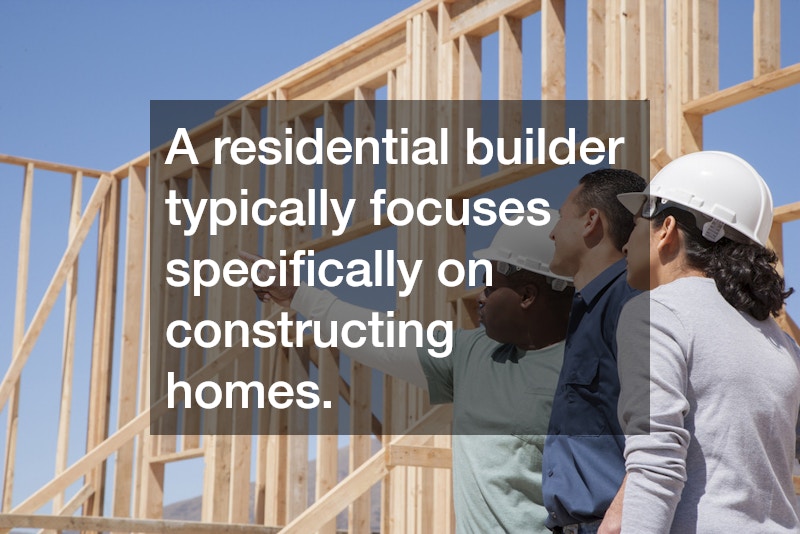
A residential builder typically focuses specifically on constructing homes. Builders may work on individual custom homes, subdivisions, townhouses, or other residential developments.
Depending on the company and project, a builder may be involved from the earliest planning stages through the final walkthrough.
Residential builders often coordinate many different aspects of new home construction. This can include preparing the site, scheduling subcontractors, ordering materials, communicating with inspectors, and making sure each phase of construction occurs in the proper sequence.
Some builders specialize in custom homes designed around an individual homeowner’s preferences. Others construct homes using predetermined floor plans and finishes. Either way, their primary area of expertise is residential construction.
What Does a General Contractor Do?
A general contractor manages construction projects and coordinates the professionals needed to complete them. Unlike residential builders, general contractors are not necessarily limited to building new homes. They may oversee renovations, additions, commercial improvements, remodeling projects, and many other types of construction work.
A homeowner may hire a general contracting service when a project involves several different trades. For example, a kitchen renovation could require electricians, plumbers, cabinet installers, flooring professionals, painters, and other specialists. The general contractor coordinates the schedule so these professionals can perform their work efficiently.
General contractors may also obtain permits, order materials, communicate with inspectors, monitor the construction schedule, and address problems that occur during the project.
Their Project Types Can Be Different
One of the clearest distinctions between residential builders and general contractors is the type of work they commonly perform. Residential builders usually concentrate on building homes from the ground up. Their projects may begin with an empty lot and end with a completely finished residence.
General contractors often handle a wider range of projects. They may oversee a basement renovation one month and a home addition the next. Some also work on commercial properties.
There are exceptions, however. Many residential builders also perform remodeling work, while some general contractors specialize almost entirely in new home construction. For this reason, homeowners should evaluate a company’s individual experience instead of relying only on its job title.
Builders May Be Involved Earlier
Residential builders are often involved much earlier in the development process than contractors hired for individual renovation projects. A builder may help evaluate a property, review architectural plans, establish construction budgets, and coordinate the many stages involved in creating a new home.
A general contracting service may become involved after a homeowner already has a clear renovation or construction plan. However, experienced contractors can also provide input during the planning process, particularly when homeowners need guidance about project feasibility, materials, or scheduling.
The amount of early involvement depends heavily on the scope of the project and the company being hired.
Both Professionals Manage Subcontractors
Residential builders and general contractors frequently rely on subcontractors to perform specialized work. Electricians, plumbers, roofers, HVAC technicians, drywall installers, painters, and flooring professionals are just some of the trades that may contribute to a construction project.
Coordinating these professionals is one of the most important responsibilities of the person overseeing the project. Certain work cannot begin until another trade has completed its portion.
For instance, walls generally cannot be fully finished until electrical wiring and plumbing located inside them have been installed and inspected. Proper scheduling helps prevent unnecessary delays.
Responsibilities Can Overlap
The construction industry contains considerable overlap between professional titles. A residential builder may essentially function as the general contractor for a new home. Likewise, a general contractor may have extensive experience building residential properties.
Because of this overlap, homeowners should focus on qualifications, licensing requirements, experience, references, insurance, and previous projects when selecting a professional.
Ask prospective contractors exactly what services they provide and which portions of the project they will personally manage. Understanding these responsibilities before signing an agreement can reduce confusion later.
When Should You Hire a Residential Builder?
A residential builder may be the most appropriate choice when constructing an entirely new home. Builders who routinely manage new residential construction understand the long sequence of steps required to turn an undeveloped or prepared lot into a finished property.
They may also have established relationships with architects, suppliers, subcontractors, and other professionals frequently involved in home construction.
Homeowners interested in custom houses should look for builders with demonstrated experience completing projects of similar size, design, and complexity.
When Should You Hire a General Contractor?
A general contractor is often ideal for remodeling projects, additions, or improvements requiring several trades. Hiring one professional to coordinate the entire project can simplify communication for the homeowner.
For example, adding another room to a house could involve excavation, foundation work, framing, roofing, electrical installation, insulation, drywall, flooring, and painting. A general contracting service can organize these different phases and act as the primary point of contact throughout construction.
Smaller projects involving only one trade may not require a general contractor at all. Replacing a furnace, for example, could simply require an HVAC company.
What Should You Ask Before Hiring?
Whether you are considering a builder or general contractor, take time to research the company carefully. Ask how long the company has been operating, whether it has experience with similar projects, and who will supervise the work each day.
Homeowners should also request a detailed estimate describing labor, materials, payment schedules, and anticipated timelines. Clarifying how change orders will be handled is especially important because unexpected modifications can affect both the project’s cost and completion date.
References and examples of completed work can provide additional insight into a contractor’s capabilities.
Choosing the Right Construction Professional
Residential builders and general contractors both play essential roles in construction, but they commonly serve different needs. Residential builders tend to specialize in creating new homes, while general contractors often manage a broader variety of renovations and construction projects.
The best choice ultimately depends on the work you are planning. If you are building a house from the ground up, an experienced residential builder may be the natural fit. If you are renovating, expanding, or significantly updating an existing property, a general contracting service may provide the project management and trade coordination you need.
Understanding these distinctions allows homeowners to choose professionals whose experience matches their project and helps create a smoother construction process from planning through completion.