
Most homeowners have never watched a professional roof installation up close. Shingles appear to just be nailed to a roof, but the actual process is far more detailed and technical than it looks from the ground.
A professional roof installation requires careful attention to ventilation, water shedding, fastener placement, and countless small details that determine whether the roof lasts twenty years or forty. Understanding how professionals do it helps explain why hiring experienced roofers matters and why cheap, sloppy installation costs far more in the long run.
The Foundation Matters As Much As the Shingles
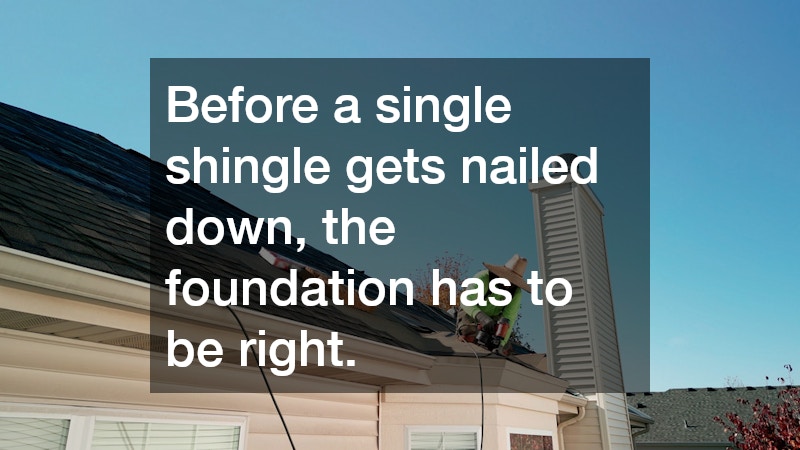
Before a single shingle gets nailed down, the foundation has to be right. Roofers first inspect and repair the roof deck, the wooden structure beneath the shingles. Rotted wood must be replaced, holes must be sealed, and the deck must be smooth and secure. If the deck is compromised, water will find its way in no matter how well the shingles are installed.
Next comes the underlayment, a moisture barrier that sits between the deck and the shingles. Underlayment protects against water that gets past the shingles, which happens more often than homeowners realize. Professional roof installation uses quality underlayment, installed carefully and sealed at seams and edges. This layer is what actually keeps your attic dry during heavy rains or windstorms.
Flashing Creates Waterproof Transitions
Anywhere the roof has penetrations like chimneys, vents, or skylights, water has a natural path to follow down into the building. Flashing, which is metal stripping that directs water away from these vulnerable spots, is critical to preventing leaks. Professional roofers install flashing carefully, overlapping layers so water always flows away from the building. A leak in a seemingly unrelated spot often traces back to improperly installed flashing.
Flashing also runs along valleys where two roof planes meet. These valleys channel water, and improper flashing in these areas causes leaks that can persist for years without the homeowner knowing why.
Shingle Placement Follows Precise Rules
When shingles finally go on, their placement is not random. Professional roofers chalk lines to ensure rows are perfectly straight. Shingles must be aligned properly so that seams do not line up across rows, which would create a path for water to seep through. The offset pattern roofers use is called a staggered pattern, and it is intentional.
Each shingle is also positioned so that its cut edges are covered by the shingle above it, creating overlapping layers that shed water downward. If shingles are positioned even slightly wrong, water can end up flowing sideways into gaps rather than flowing down and off the roof.
Fastening Is Critical and Often Overlooked
How shingles are fastened matters tremendously. A professional roof installation uses the correct fastener for the climate and situation. In windy areas, fasteners might be different than in calm climates. The number of fasteners per shingle is specified by manufacturers and building codes, and professionals follow these specifications religiously.
Fasteners must be driven at the right depth, into the correct location on the shingle, and at the right angle. Over-driven fasteners can puncture the shingle and create a leak point. Under-driven fasteners leave the shingle loose, allowing it to lift in wind. A roofer experienced in quality roof installation has done this thousands of times and does it consistently right.
Ventilation Prevents Moisture and Premature Failure
A common mistake in budget roof installations is cutting costs on ventilation. Proper airflow in the attic extends shingle life significantly. Heat and moisture that build up in an unventilated attic cause shingles to age faster and fail sooner. Professional roof installation includes ensuring that soffit vents, ridge vents, or other ventilation systems are clear and functioning.
Ventilation also matters in different climates. In cold climates, proper ventilation prevents ice dams from forming along the eaves. In hot climates, it allows heat to escape and reduces cooling costs. A professional installation accounts for climate-specific needs.
Ridge Caps Seal the Top
The peak of the roof, where two roof planes meet, needs special attention. Ridge caps cover this peak and prevent water from flowing into the interior of the building. Professional roofers install ridge caps carefully, typically using the same type of shingles as the rest of the roof, cut to size and nailed or adhered properly.
Ridge caps are high-stress areas that experience weather and wind stress more than other parts of the roof, so they must be installed solidly.
Cleanup and Inspection Finish the Job
A professional roof installation includes thorough cleanup. Nails, debris, and scraps get picked up so they do not damage gutters or become hazards. A reputable roofer walks the property with a magnet to catch any stray fasteners.
Before the job is finished, the homeowner and roofer should walk the roof together and inspect the work. This final inspection catches any issues while the contractor is still there to address them.
The Difference Between Cheap and Quality
The difference between a cheap roof installation and a quality one might not be visible from the ground, but it shows up within years. Cheap installations cut corners on underlayment, skip flashing, fasten shingles improperly, and ignore ventilation. Quality roof installation follows every specification and detail, which is why the resulting roof lasts for decades.