
Choosing a new air conditioner can be more complicated than it first appears. Homeowners may need to compare central air systems, ductless mini-splits, heat pumps, window units, and portable models while also considering home size, efficiency, climate, existing ductwork, and budget.
The best choice depends on how much of the home needs cooling and how the property is already set up. Before scheduling an AC installation, it helps to understand the main types of air conditioning systems and where each one tends to make the most sense.
Central Air Conditioning
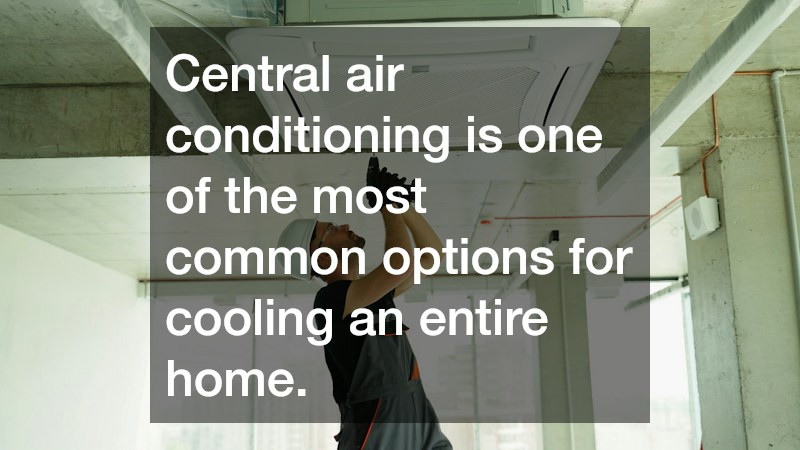
Central air conditioning is one of the most common options for cooling an entire home.
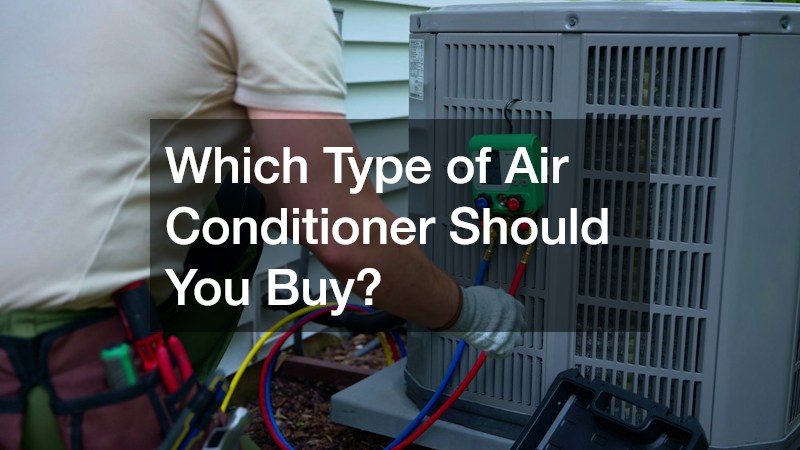
These systems typically use an outdoor condenser and an indoor evaporator coil connected to the home’s ductwork. Cooled air is distributed through supply vents in different rooms.
Central air can be a strong choice for homes that already have properly designed ductwork. It provides consistent cooling throughout the property and can be controlled from one thermostat.
However, homes without existing ducts may require additional installation work, which can increase the overall project cost.
Before an AC installation, a contractor should also inspect the condition and sizing of the duct system.
Ductless Mini-Split Systems
Ductless mini-splits provide cooling without traditional ductwork.
These systems usually consist of an outdoor unit connected to one or more indoor air-handling units. Each indoor unit can cool a particular room or zone.
Mini-splits can be useful for older homes without ducts, finished additions, garages, upstairs spaces, or rooms that consistently stay warmer than the rest of the house.
They also allow homeowners to control temperatures independently in different areas.
One potential drawback is that the indoor units remain visible on walls or ceilings, which some homeowners may not prefer aesthetically.
Heat Pumps
A heat pump can provide both cooling and heating.
During warm weather, it operates similarly to an air conditioner by moving heat from inside the home to the outdoors. During cooler weather, the process can be reversed to bring heat inside.
For homeowners replacing both their cooling and heating systems, a heat pump may be worth considering during the AC installation process.
Different types of heat pumps are available, and their performance can depend on climate, equipment specifications, and home design.
In colder areas, a contractor can explain whether supplemental heating may be necessary.
Window Air Conditioners
Window air conditioners are designed to cool individual rooms or small spaces.
They are usually much less expensive upfront than whole-home systems and can be installed without major modifications to the property.
A window unit may make sense for an apartment, bedroom, home office, or other area where cooling the entire building is unnecessary.
The tradeoff is limited coverage.
A single window unit generally cannot provide consistent cooling throughout a larger home, and using several units may increase noise and reduce window access.
Portable Air Conditioners
Portable air conditioners offer another room-by-room cooling option.
These units sit inside the home and usually connect to a window using an exhaust hose.
Their biggest advantage is flexibility. A portable unit can sometimes be moved between rooms as needed.
However, they typically require floor space and may be less efficient than other cooling options for the same room.
They can still be useful for temporary cooling or spaces where a window-mounted unit is not practical.
Consider the Size of Your Home
Air conditioner size is one of the most important factors in system selection.
A larger unit is not automatically better.
An air conditioner that is oversized may cool the home too quickly and shut off before adequately removing humidity. Frequent cycling can also affect comfort and system wear.
An undersized system may run for long periods while struggling to maintain the desired temperature.
Before recommending an AC installation, an HVAC professional should evaluate factors such as square footage, insulation, windows, orientation, ceiling height, and local climate.
Look at Your Existing Ductwork
If your home already has ducts, their condition should influence your decision.
Leaks, disconnected sections, poor insulation, and improper sizing can reduce system performance.
Installing a high-efficiency air conditioner will not necessarily solve comfort problems caused by damaged ductwork.
A contractor may recommend sealing, repairing, or modifying ducts as part of the project.
Homes without ducts may be better candidates for ductless mini-splits or another system that does not require extensive remodeling.
Compare Energy Efficiency
Efficiency can affect operating costs over the life of the equipment.
Air conditioners are commonly rated using efficiency measurements such as SEER2. In general, higher-rated systems are designed to provide more cooling for the electricity they use under standardized test conditions.
However, the highest-efficiency model is not automatically the best financial choice for every homeowner.
Equipment price, climate, expected usage, and how long you plan to stay in the home should all factor into the decision.
A properly sized and installed system is also essential for achieving the performance the equipment was designed to provide.
Think About Humidity Control
Air conditioning does more than lower indoor temperatures. It also removes moisture from the air.
Humidity control can be especially important in warm, humid climates.
A correctly sized air conditioner generally does a better job of controlling humidity than one that is significantly oversized.
Some systems also include variable-speed or multi-stage technology that allows the equipment to operate at lower output for longer periods.
These longer cycles may improve comfort and humidity management.
Ask about humidity performance when comparing options for your AC installation.
Consider Noise Levels
Air conditioning equipment can create noise both indoors and outdoors.
Modern systems often publish sound ratings that allow homeowners to compare models.
Noise may be particularly important when the outdoor condenser needs to be installed near a bedroom, patio, or neighboring property.
Ductless indoor units and window air conditioners also produce different amounts and types of sound.
If quiet operation is a priority, mention it before choosing equipment.
Decide Whether You Want Zoned Cooling
Zoning allows different parts of a home to be cooled separately.
Ductless mini-splits naturally offer this capability because individual indoor units can have separate controls.
Traditional central HVAC systems can sometimes be configured with multiple zones using dampers and additional thermostats.
Zoning may be useful in larger homes, multi-story properties, or households where different occupants prefer different temperatures.
It can also help avoid cooling rarely used spaces as aggressively as occupied rooms.
Consider Smart Controls
Many modern HVAC systems can work with smart thermostats or connected controls.
These features may allow homeowners to create schedules, change temperatures remotely, monitor energy usage, or receive maintenance notifications.
Some advanced air conditioning systems have proprietary controls designed to manage variable-speed equipment.
If smart-home integration matters to you, ask about compatibility before completing the AC installation.
It is easier to choose compatible equipment from the beginning than to discover limitations afterward.
Think About Your Long-Term Plans
Your expected time in the home can influence how much it makes sense to invest.
A homeowner planning to stay for many years may place greater value on efficiency, advanced controls, zoning, and quieter operation.
Someone preparing to sell may prioritize reliable whole-home cooling and reasonable replacement cost.
There is no universal answer.
The best system is the one that fits both the property and the owner’s priorities.
Compare Installation Requirements
Different types of air conditioners require different levels of installation work.
A central system may involve duct modifications, electrical upgrades, refrigerant lines, drainage, and equipment pads.
Mini-splits require refrigerant and electrical connections between indoor and outdoor units.
Even smaller systems need proper placement and ventilation.
Professional AC installation helps ensure the equipment is correctly sized, connected, charged, and configured according to manufacturer requirements and applicable codes.
Choose the System That Fits the House
The best air conditioner depends on the property rather than the popularity of a particular system.
Central air may be ideal for a home with good existing ductwork. Ductless mini-splits may work better for additions or homes without ducts. Heat pumps can combine heating and cooling, while window and portable units may be practical for individual rooms.
Before committing to an AC installation, compare equipment size, efficiency, humidity control, noise, zoning options, installation requirements, and total cost.
A qualified HVAC contractor can evaluate the home and explain which systems are realistic options. Taking the time to compare those choices can help homeowners select cooling equipment that provides dependable comfort without paying for features or capacity they do not actually need.