Small rooms have a way of making even the most patient person feel a little claustrophobic. You rearrange the furniture, swap out the rug, maybe paint a wall a lighter shade, and yet the space still feels boxed in. The frustrating part? The square footage isn’t really the issue. It’s how your eyes read the room.
Lighting is one of the most underused tools for changing that perception. The right fixtures, placed in the right spots, can push walls back, lift ceilings, and make corners dissolve into soft shadow. The wrong ones, meanwhile, flatten everything into a shoebox under a bulb.
This piece walks through the most common lighting mistakes people make in tight spaces and offers practical fixes for each one. No gut renovations, no knocking down walls, just smarter placement and a few overlooked tricks that can change how a room feels the moment you flip the switch.
Why Does My Small Room Still Feel Cramped Even With Lights On?
The usual culprit is a single overhead fixture doing all the work. One ceiling light pouring down from the center of the room creates harsh shadows along the walls and corners, which visually shrinks the space. Your eye reads those dark edges as the boundary of the room, and the room feels smaller than it actually is.
The solution is layering. Instead of relying on one source, spread the light across three levels: overhead (ambient), mid-height (task), and low (accent). When light touches multiple planes, the brain registers depth, and depth reads as space.
According to a 2024 review in Frontiers in Psychology, washing the walls with light created a stronger sense of openness than cove lighting tucked near the ceiling. That’s a useful hint: aim your fixtures outward, not just downward, and let the walls themselves become part of the glow.
How Should I Place Lights Near the Walls?
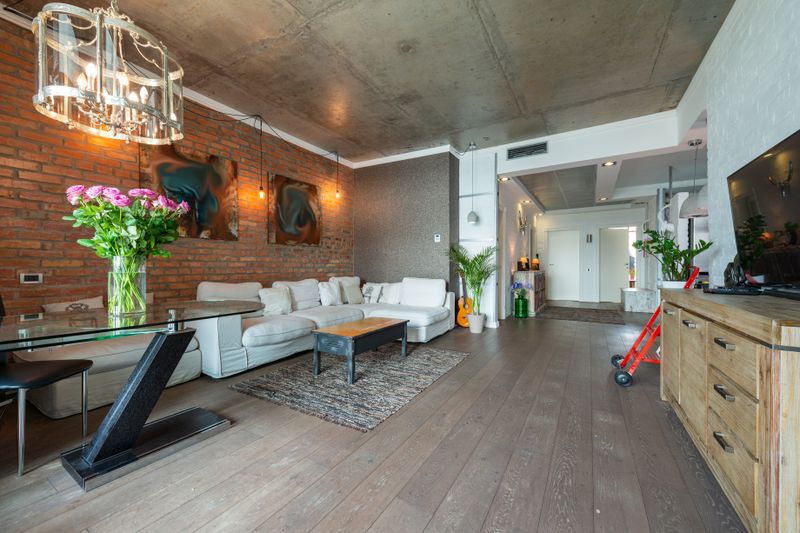
Wall-washing is the single most effective trick for making a small room feel larger. When vertical surfaces are evenly lit, the walls appear to recede, and the room reads as more open. The trick is distance and angle, not brightness.
Position recessed or track lights about 24 to 30 inches away from the wall, angled slightly toward it. Avoid putting fixtures directly against the wall, which creates scalloped hot spots rather than a smooth wash. If recessed cans aren’t an option, slim LED strip lights hidden behind a floating shelf or crown molding can do the same job for a fraction of the cost.
Here are a few placements that reliably open up a small room:
- Uplights tucked behind a sofa or armchair, aimed at the wall above
- LED strips mounted on top of tall bookshelves, bouncing light onto the ceiling
- Picture lights above artwork to draw the eye upward and outward
- Wall sconces at eye level flanking a bed, mirror, or doorway
- Floor-level cove lighting beneath built-ins to make furniture appear to float
Why Mirrors Belong in the Conversation
Mirrors are lighting tools, not just decor. A mirror placed opposite or adjacent to a lamp or window essentially doubles your light source and tricks the eye into perceiving more depth. For the biggest impact, lean a tall mirror against a wall near a lamp, or hang one directly across from your brightest window. The reflected light softens shadows and stretches sightlines without adding a single watt.
What’s the Best Way to Light a Low Ceiling?
Low ceilings are one of the trickiest problems in small-space design. A flush-mount fixture glued to the ceiling only draws attention to how close that ceiling is. The fix is to light the ceiling itself, making it feel higher than it measures.
Uplighting is your friend here. Floor lamps that shoot light upward, torchieres in corners, and wall sconces angled toward the ceiling all create the illusion of vertical lift. Pair them with a matte white or very pale ceiling paint, which will diffuse the light evenly instead of reflecting it as a glossy hotspot.
Avoid pendant lights that hang low over seating areas in a small room with a low ceiling. They chop the vertical space in half and emphasize the limitation. If you need focused light over a dining table or kitchen island, choose a slim, linear fixture mounted as close to the ceiling as the design allows.
How Do I Choose Fixtures That Don’t Overwhelm the Space?
Scale matters more than style in a tight room. An oversized chandelier might look dramatic in a magazine, but in a 10-by-12 room it reads as clutter. The goal is fixtures that provide good light without hogging visual real estate. This is where thoughtful Home Styling choices pay off, because the fixture you pick is both a light source and a sculptural object competing for attention.
Slim profiles, clear glass, exposed bulbs, and wall-mounted options all tend to work better than bulky shades or heavy metal frames. If you love a statement piece, let it be the only one in the room and keep the surrounding lighting minimal and recessed.
Consider these fixture types for small rooms:
- Plug-in wall sconces that free up floor and table space
- Slim arc floor lamps that reach over furniture without a wide base
- Clip-on reading lights attached to shelves or headboards
- Puck lights under cabinets or inside display niches
- Pendant cords with small, open-cage shades rather than solid drums
A Note on Bulb Color
Color temperature can make or break the effect. Warm white bulbs around 2700K feel cozy but can make a small room feel heavier and more enclosed. A slightly cooler 3000K to 3500K bulb reads cleaner and expands the sense of space, especially when paired with light-colored walls. Daylight bulbs above 4000K are usually too clinical for living areas but work well in task zones like kitchens and bathrooms.
What Lighting Mistakes Should I Stop Making Right Now?
Some habits actively shrink a room, and most of us are guilty of at least one. The good news is they’re easy to reverse without spending much. If you’re exploring home renovation ideas on a budget, rethinking your lighting is one of the cheapest and highest-impact changes you can make before touching a single wall or piece of furniture.
Here are the most common mistakes to correct:
- Using only one central ceiling fixture with no supporting lamps
- Placing lamps only in corners, leaving the middle of the room dim
- Choosing dark lampshades that absorb light instead of diffusing it
- Pointing all light downward and leaving the ceiling in shadow
- Mixing too many bulb color temperatures in the same room
- Blocking natural light with heavy curtains or furniture under the window
Fixing even two or three of these will make a noticeable difference overnight. Pay particular attention to the balance between natural and artificial light during the day. Sheer curtains, repositioned furniture, and a well-placed mirror can stretch daylight much further than any fixture.
Smart Decorating With Light for Tiny Spaces
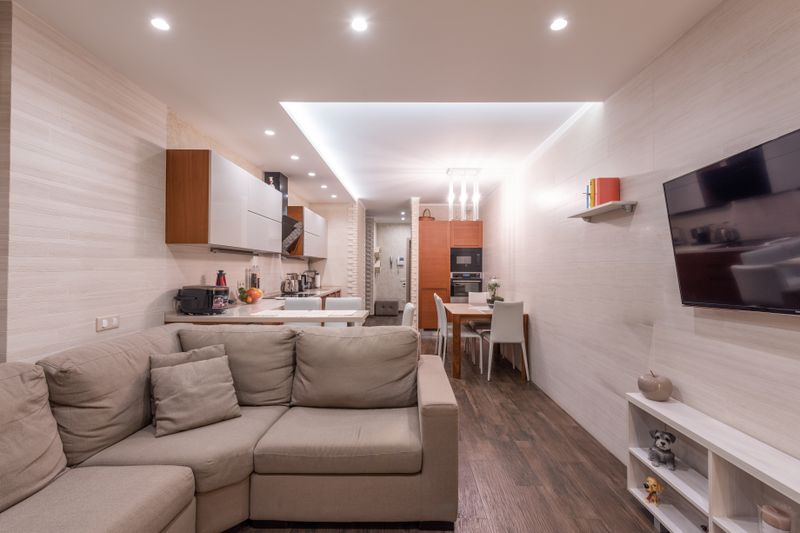
When you think about decorating with light as a design layer, the approach to small rooms changes. Instead of asking how much light you need, ask where the eye should travel. Every fixture is a cue telling someone’s attention to move up, outward, or deeper into the room. Done well, it becomes a quiet form of direction that makes the space feel intentional rather than cramped.
Start by identifying the longest sightline in the room. That’s usually the diagonal from the doorway to the farthest corner. Place a light source at the end of that line, whether it’s a floor lamp, a sconce, or an illuminated shelf. The eye will follow the glow all the way across, and that distance translates into perceived size. Rooms feel bigger when the gaze has somewhere to land.
Layering accents also helps break up the monotony of a boxy floor plan. A small puck light inside a glass cabinet, a candle-style bulb on a narrow console, or a plug-in picture light above a framed print all add tiny pockets of interest. These little moments pull attention away from the walls and ceiling, which is exactly what you want when square footage is limited. The same thinking shows up in other budget-friendly space expansion strategies, where small visual tricks consistently outperform expensive structural changes.
Pairing Light With Reflective Surfaces
Reflective finishes amplify everything you’ve already set up. A glossy tray on a coffee table, a metallic lamp base, or a mirrored side table catches ambient light and sends it back into the room from new angles. You don’t need a full glam makeover for this to work; one or two reflective pieces per room is usually enough. Matte surfaces absorb light and anchor the space, so balance is key. Too much shine looks busy, too little feels flat.
Glass-topped furniture deserves special mention. A clear acrylic chair or a glass side table lets light pass through instead of stopping it cold, which keeps the floor plan feeling open. In a studio or small bedroom, swapping one solid piece for a transparent one can shift the entire mood without changing the footprint.
Putting It All Together Room by Room
Each room has its own quirks, and the placement strategy should flex accordingly. A bedroom benefits from symmetrical sconces flanking the bed, a soft uplight in one corner, and a dimmable overhead for flexibility. Skip the bulky nightstand lamps if the surface is narrow, and go wall-mounted instead to reclaim the tabletop.
In a small living room, aim for at least four light sources at different heights. A floor lamp behind the sofa, a table lamp on a side table, a picture light above art, and a soft overhead gives you full coverage without any single fixture dominating. Dimmers on every circuit let you shift the mood from bright and functional to low and intimate without rearranging anything.
Kitchens and bathrooms can handle cooler bulbs and more direct light, but even here, under-cabinet strips and toe-kick lighting add depth that a single ceiling fixture never will. Entryways, often the smallest room in the house, come alive with a single wall sconce and a mirror positioned to catch the light.
Conclusion
Small rooms don’t need more square footage to feel bigger. They need light placed with intention. Washing the walls, lifting the ceiling, adding mid-height glow, and layering accents all work together to push boundaries outward in a way the eye reads as space. None of it requires construction, and most of it can be done in an afternoon with fixtures you already own or can find inexpensively.
The real shift happens when you stop thinking of lighting as a utility and start treating it as a design layer. Every lamp, sconce, and strip is doing double duty: illuminating the room and sculpting how it feels. Once you see fixtures that way, the choices get easier and the results more dramatic.
Try one change this week. Move a lamp closer to a wall, swap a dark shade for a pale one, or add a mirror across from your brightest window. Pay attention to how the room reads afterward. Small tweaks compound quickly, and before long the space that used to feel like a shoebox will feel like somewhere you actually want to spend time.