

Highlights
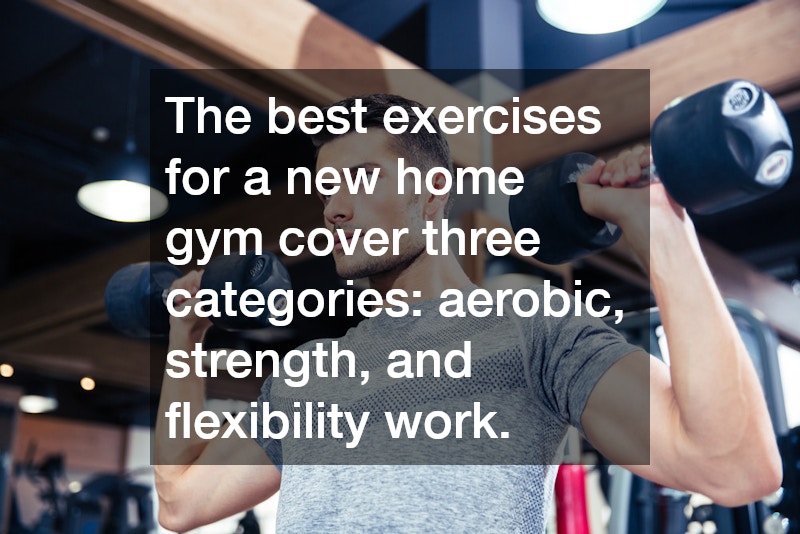
- The best exercises for a new home gym cover three categories: aerobic, strength, and flexibility work.
- Bodyweight strength exercises like squats and push-ups require no equipment and build a strong foundation.
- Adults need at least 150 minutes of moderate aerobic activity and two strength sessions each week.
- Warming up properly before lifting reduces injury risk more than almost any other single habit.
- A well-rounded routine that mixes exercise types keeps workouts interesting and reduces overuse injuries.
- Thoughtful equipment choices in a custom home gym make it easier to progress safely over time.
What Are the Top Exercises to Try in a New Home Gym?
The top exercises to try in a new home gym are the ones that build a complete, well-rounded routine rather than focusing on just one muscle group or workout style. A strong foundation includes aerobic movement to build endurance, strength training to build muscle, and flexibility work to keep joints moving freely. According to the National Institute on Aging, doing one type of exercise actually improves your ability to do the others, and mixing types reduces both boredom and injury risk. Whether a custom home gym includes a full rack and cardio machine or just a few dumbbells and open floor space, the exercises below cover all three categories and can scale to whatever equipment is available.
What Aerobic Exercises Work Best at Home?
Cardio doesn’t require a treadmill or elliptical to be effective. A few reliable options for home aerobic training include:
- Jumping jacks — a simple, equipment-free way to elevate heart rate quickly
- High knees or mountain climbers — build cardio endurance while also engaging the core
- Jump rope — one of the most space-efficient, high-intensity cardio options available
- Stair climbing — using an actual staircase or a step platform for repeated intervals
- Shadow boxing — combines cardio with coordination and upper-body engagement
- Stationary cycling or rowing — worthwhile investments for a dedicated cardio machine if space allows
Rotating through a few of these keeps cardio sessions varied enough to stay motivating over the long term.
What Strength Exercises Should Anchor Your Routine?
Strength training is where a home gym often earns its keep, and a handful of foundational movements cover the major muscle groups efficiently. Squats, lunges, and glute bridges target the legs and hips, while push-ups, dumbbell rows, and overhead presses cover the chest, back, and shoulders. Planks and dead bugs round out core strength without requiring any equipment at all. According to CDC guidance on physical activity for adults, effective strength training should work all major muscle groups, including the legs, hips, back, abdomen, chest, shoulders, and arms, with one to three sets of 8 to 12 repetitions performed to the point where another rep would be difficult. Starting with bodyweight versions of these movements before adding external weight is a smart way to build proper form before increasing resistance.
How Should You Warm Up Before Lifting?
Skipping a warm-up is one of the most common mistakes people make when starting a new strength routine, and it’s also one of the easiest to fix. A proper warm-up should raise heart rate and loosen muscles and joints before any heavy lifting begins, typically through a few minutes of light cardio like brisk walking or easy jogging in place. According to OrthoInfo from the American Academy of Orthopaedic Surgeons, warming up increases heart and blood flow rates and loosens muscles, tendons, ligaments, and joints, which meaningfully reduces the risk of strains and other injuries once the actual workout begins. Five to ten minutes is usually enough, and it’s worth treating as a non-negotiable part of every session rather than an optional extra.
What Flexibility and Mobility Exercises Round Out a Routine?
Strength and cardio tend to get most of the attention, but flexibility work is what keeps a body moving well enough to do both safely over the long term. A few staples worth building into a weekly routine:
- Standing hamstring stretch — improves flexibility in the back of the legs, useful after lower-body strength work
- Hip flexor stretch — counteracts tightness from sitting and supports better squat and lunge form
- Shoulder and chest stretch — helps offset the forward-hunched posture common from desk work
- Cat-cow stretch — a gentle spine mobility movement that also doubles as a light warm-up
- Child’s pose — a restorative stretch that targets the back, hips, and shoulders simultaneously
- Foam rolling — not a stretch exactly, but a valuable addition for working out muscle tightness after a session
Stretching after a workout, once muscles are already warm, tends to be more effective and safer than stretching cold.
How Often Should Each Type of Exercise Happen?
Balancing frequency across exercise types is just as important as choosing the right movements. Aerobic activity should happen most days of the week in some form, building toward at least 150 minutes of moderate-intensity cardio weekly. Strength training works best on two or more non-consecutive days to allow muscles time to recover between sessions, while flexibility work can reasonably happen daily, especially as a cooldown after other exercise. This kind of structured spacing prevents overtraining any single muscle group and keeps a weekly routine sustainable rather than something that burns out enthusiasm within a few weeks.
What Should You Consider When Equipping a Home Gym?
The exercises above work with minimal equipment, but thoughtful additions can expand what’s possible as fitness goals grow. A set of adjustable dumbbells covers an enormous range of strength exercises without taking up much space, while resistance bands add versatility for both strength and mobility work at a low cost. A stability ball or yoga mat supports core and flexibility exercises, and a pull-up bar opens up upper-body movements that are otherwise hard to replicate. For anyone building out a custom home gym with more serious strength goals in mind, a squat rack or adjustable bench eventually becomes worth the investment, but starting with a few versatile basics lets a routine develop before committing to bigger equipment purchases.
What’s the Best Way to Get Started?
Building an effective home workout routine comes down to balance: pairing aerobic movement, strength training, and flexibility work rather than fixating on just one. Starting with bodyweight versions of core strength exercises, warming up properly before every session, and stretching afterward sets a foundation that reduces injury risk while still delivering real results. Equipment can be added gradually as goals evolve, but the exercises that matter most, squats, push-ups, planks, and a few minutes of daily cardio, require little more than floor space to get started. Consistency across all three exercise types, more than any single piece of equipment, is what actually determines how much a home gym pays off over time.
Related Posts

The Right Way to Tackle Upholstery Cleaning
When your couch starts looking grimy or stained, it’s time for some upholstery cleaning. But don’t just dive in randomly.…

Why You Should Remodel Your Home
Home remodeling is an investment that can significantly enhance your living space and increase the value of your property. Whether…

How to Save Money When Hiring a Plumber
To effectively save money when hiring a plumber, the very first step involves doing thorough research. You should seek out…