
When a roofing problem appears, homeowners often face an important question: should the damaged area be repaired, or is it time to replace the entire roof?
The right answer depends on several factors, including the age of the roof, the extent of the damage, previous repairs, material condition, and the homeowner’s long-term plans. In many situations, roof repair is a practical and cost-effective option. In others, continuing to patch an aging system may only delay an inevitable replacement.
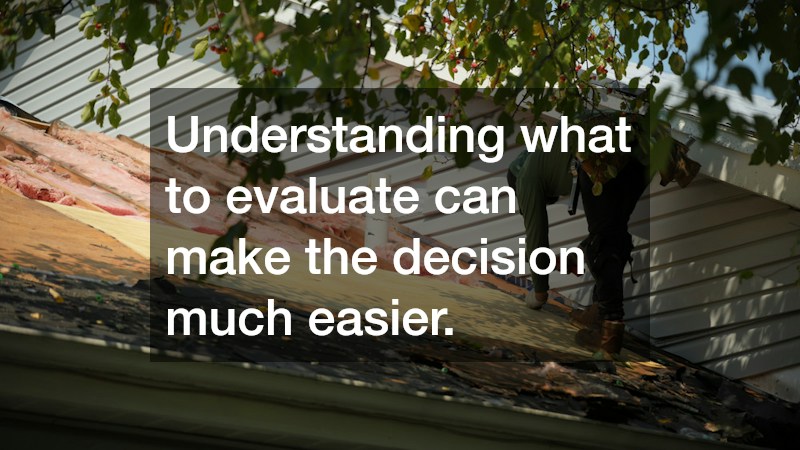
Understanding what to evaluate can make the decision much easier.
Start With the Age of the Roof
Roof age is one of the first things homeowners should consider.
A relatively new roof with isolated damage may be a strong candidate for repair. If only a few shingles were damaged in a storm or a small section of flashing failed, replacing the entire roof may not be necessary.
An older roof is different.
As roofing materials near the end of their expected service life, problems may become more frequent. In that situation, another roof repair could provide only a temporary solution while other sections continue deteriorating.
Homeowners who know when the roof was installed can use that information as a starting point when discussing options with a roofing professional.
Evaluate the Extent of the Damage
Localized damage is more likely to be repairable than widespread deterioration.
A few missing shingles, a damaged vent, or a small leak around flashing may be relatively straightforward to address.
However, extensive missing shingles, large areas of curling or cracking, multiple leaks, widespread granule loss, or broad sections of damaged decking may indicate that replacement is the better long-term option.
The visible problem does not always reveal the full extent of the damage, so a professional inspection can be helpful.
Consider Where the Leak Is Coming From
Not every leak means the entire roof has failed.
Water can enter through damaged flashing, loose fasteners, cracked seals, skylights, vents, or isolated shingle damage.
If the source is clearly identified and the surrounding materials are still in good condition, roof repair may solve the problem effectively.
Multiple leaks in different parts of the house can be more concerning.
When water is entering from several areas, the roofing system may have widespread weaknesses that make full replacement more practical.
Look at the Condition of the Shingles
Shingles provide visible clues about overall roof condition.
Homeowners should look for curling edges, cracking, missing pieces, discoloration, exposed underlayment, and areas where granules have worn away.
One or two damaged shingles can often be replaced.
If the same problems appear across large sections of the roof, repairing individual areas may become less efficient.
A roof that looks uniformly worn may be signaling that the material is nearing the end of its useful life.
Check for Decking Damage
The roof deck sits beneath the roofing materials and provides structural support.
Long-term leaks can cause sections of decking to soften, rot, or deteriorate.
A small damaged section may be replaced during a roof repair, but widespread decking problems can make the project more extensive.
Signs of possible decking issues include sagging areas, persistent leaks, or soft spots discovered during inspection.
Because much of the deck is hidden until roofing materials are removed, contractors may sometimes find additional damage once work begins.
Think About How Often Repairs Are Needed
One isolated repair is very different from repeated roofing problems.
If you have already paid for several repairs in recent years, it may be worth adding up those costs.
Repeated service calls can eventually become less economical than replacing the roof.
Frequent leaks or missing shingles may also indicate that the system is deteriorating as a whole rather than experiencing unrelated minor problems.
A repair can still make sense temporarily, but homeowners should consider whether it is simply postponing a larger expense.
Compare Short-Term and Long-Term Costs
Repair usually costs less upfront than replacement.
For homeowners dealing with a limited problem on a roof that is otherwise in good condition, that lower cost can make roof repair the obvious choice.
However, the cheapest option today is not always the least expensive over several years.
If a repair is likely to be followed by additional repairs soon, replacement could provide better long-term value.
Homeowners should compare not only the immediate estimate but also the expected remaining life of the roof.
Consider Whether Matching Materials Are Available
Appearance can become an issue when repairing an older roof.
Shingle colors may fade over time, and manufacturers may discontinue specific product lines or styles.
This means replacement shingles may not perfectly match the existing roof.
A slight color difference may not matter to every homeowner, especially if the repair is located in a less visible area.
For highly visible damage, however, mismatched materials can affect curb appeal.
Homeowners should ask contractors how closely new materials are expected to match.
Factor in Storm Damage
Wind, hail, fallen branches, and other severe weather can damage a roof suddenly.
After a storm, the extent of the damage should be evaluated carefully.
A few missing shingles may require only roof repair, while widespread wind or hail damage could justify replacement.
Storm damage can also affect flashing, gutters, vents, and other roofing components.
Homeowners should document visible damage and arrange an inspection rather than assuming that the roof is fine simply because there is no immediate indoor leak.
Think About Energy and Ventilation Issues
Roof performance can also be affected by ventilation and insulation.
If the attic becomes excessively hot or humid, roofing materials may experience additional stress. Moisture can also contribute to deterioration of decking and other components.
Replacing the roof can provide an opportunity to address ventilation problems at the same time.
A simple repair may still be appropriate if the roof is in good condition, but recurring performance issues deserve a broader evaluation.
Consider Your Future Plans for the Home
How long you intend to stay in the property may also influence the decision.
If you plan to remain in the home for many years, replacing an aging roof can provide greater peace of mind and reduce the likelihood of repeated repairs.
If you expect to sell soon, the condition of the roof may also affect buyer interest and negotiations.
That does not mean every older roof should automatically be replaced before a sale. A professional can help determine whether roof repair is sufficient or whether replacement would better address the condition of the system.
Review Warranty Considerations
Roofing materials and workmanship may be covered by warranties, depending on the age and circumstances.
Before paying for major work, homeowners should review any existing warranty documents.
Some repairs may be covered, while certain types of damage may be excluded.
Replacement projects also often come with new material and workmanship warranties.
Understanding the available coverage can influence the financial comparison between repair and replacement.
Ask for a Professional Inspection
Homeowners can identify obvious signs of trouble from the ground, but determining the true condition of a roofing system often requires professional evaluation.
A roofer can inspect shingles, flashing, valleys, penetrations, ventilation, and other components.
They can also explain whether the damage appears isolated or widespread.
When possible, ask for a clear explanation of why roof repair or replacement is being recommended.
A trustworthy contractor should be able to describe the condition of the roof and the likely advantages and limitations of each option.
Make the Decision Based on the Whole Roof
Choosing between repair and replacement should not come down to one damaged shingle or one leak.
Homeowners should consider roof age, material condition, repair history, structural damage, storm exposure, costs, warranties, and future plans for the property.
Roof repair can be an excellent option when damage is limited and the rest of the roofing system remains healthy. Replacement may make more sense when deterioration is widespread or repeated repairs are becoming common.
Taking a long-term view can help homeowners choose the option that protects the property while making the best use of their roofing budget.