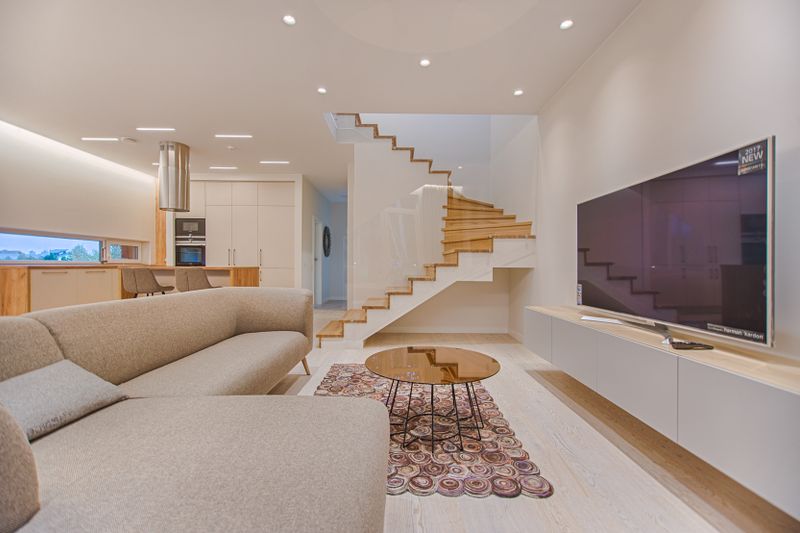

Open floor plans have become one of the most sought-after features in modern homes, and for good reason. They invite natural light to travel freely, make small square footage feel generous, and give families a shared space to cook, work, and relax together. But all that openness can create a styling puzzle. Without walls to anchor furniture or separate activities, a room can feel more like a warehouse than a home.
The good news is you don’t need a designer’s retainer or a full renovation to make these spaces sing. A few gallons of thoughtfully chosen paint, some well-placed patterns, and a willingness to experiment can completely transform how an open layout looks and functions. Color defines zones. Pattern adds rhythm. Together, they do the heavy lifting that walls used to do.
This guide digs into the research, psychology, and practical techniques behind using paint and pattern to style open layouts on a modest budget. Whether you’ve just moved in or you’ve lived with a confusing great room for years, there are strategies here that cost less than a weekend dinner out.
Why Open Layouts Demand a Different Styling Approach
Open floor plans dissolve the traditional cues that tell us where one room ends and another begins. In a closed layout, doorways and walls do the organizing for you. Remove those boundaries, and suddenly the eye has nowhere to rest. The result is often a space that feels busy and blank at the same time.
Buyers clearly value this openness despite the styling challenges. According to Homes.com, 61% of new construction owners ranked an open-concept floor plan as their most important feature, with intenders not far behind at 59%. That demand translates into real market value, too. Redfin reports that homes with open-concept living sold for 102.6% of their list price in fall 2025, showing that buyers will pay a premium when the layout is executed well.
The takeaway for anyone styling one of these spaces is simple. You’re not just decorating a room. You’re creating visual boundaries, defining purpose, and guiding movement, all without putting up a single wall.
How Paint Creates Invisible Rooms
Color is the most powerful and affordable tool in your styling kit. A gallon of quality interior paint costs between $30 and $60, and it can redefine an entire area in a single weekend. The National Association of Realtors notes that interior paint can recover over 100% of its cost at resale, making it one of the smartest low-cost upgrades you can make.
In an open layout, paint acts like a quiet set of walls. A deeper shade behind the dining table signals “this is where we eat.” A warm neutral around the sofa whispers, “relax here.” The trick is choosing colors that differ enough to create zones but share a common undertone so the space still feels unified.
Here are a few color strategies that tend to work well in open plans:
- Paint a single accent wall behind a focal piece like a sofa or dining buffet to anchor that zone
- Use the same ceiling color throughout to maintain visual continuity overhead
- Choose two or three wall colors from the same undertone family, such as all warm or all cool
- Extend trim and door colors across the full space to tie everything together
- Try a color-drenched nook, painting walls, trim, and ceiling in one shade, to carve out a reading or work area
The Psychology Behind Zoning With Color
Color psychology research consistently shows that cooler tones like soft blues and sage greens slow the heart rate slightly and encourage calm, which makes them excellent for lounge or reading zones. Warmer tones like terracotta, mustard, and clay stimulate appetite and conversation, which is why they thrive in dining nooks. Using these associations intentionally gives each zone a mood without requiring any construction.
Using Pattern to Add Depth Without Clutter
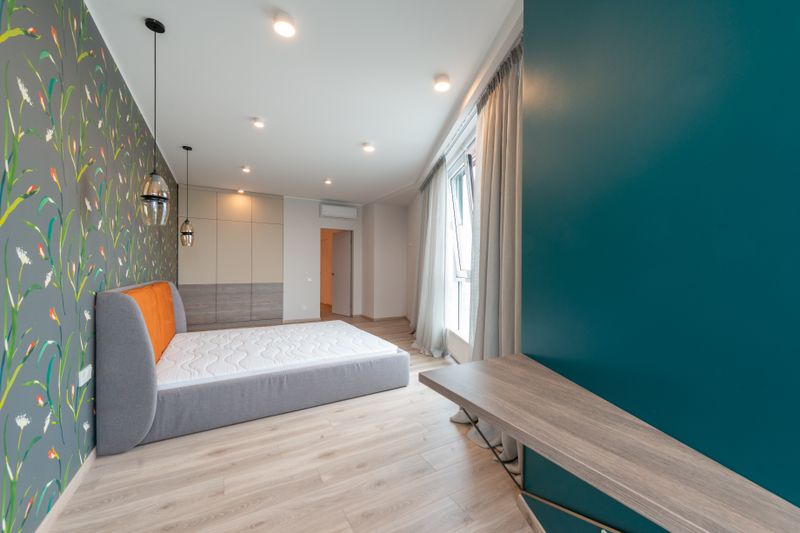
Pattern is where many budget stylists stumble. Too little, and the space feels flat. Too much, and it reads as chaotic. The sweet spot comes from layering patterns in varying scales so each one has room to breathe.
A good rule is to combine one large-scale pattern, one medium, and one small. The large might be a bold area rug. The medium could be curtain panels or a loveseat. The small might show up on throw pillows or a lampshade. When the scales differ, your eye can distinguish them instead of blending them into noise.
Pattern also works as a zoning tool. A patterned rug under the dining table immediately separates it from the adjacent living area, even when there’s no change in flooring. Removable wallpaper, which runs about $40 to $60 per roll, can define an entry wall or a home office corner without any long-term commitment.
Smart Home Styling on a Shoestring Budget
You don’t need a five-figure budget to make an open layout feel considered and complete. In fact, some of the most striking spaces come from constraint rather than abundance. Good Home Styling leans on restraint, repetition, and a clear point of view rather than buying everything in sight.
For context on costs, AmeriSave reports that the average bedroom remodel in 2026 runs between $1,500 and $5,500 depending on size and scope. Open-plan styling using paint and pattern typically falls well below the low end of that range, especially if you tackle the painting yourself and shop secondhand for textiles.
Here’s where to spend and where to save:
- Spend on paint quality, since cheap paint requires more coats and fades faster
- Save on throw pillows by swapping covers rather than whole inserts
- Spend on one anchor rug that defines your largest zone
- Save on art by framing fabric remnants, vintage maps, or botanical prints from old books
- Spend on good lighting, which does more to shape a space than most furniture
- Save on accent furniture by refinishing thrifted pieces with paint or new hardware
Sourcing Materials Without Overspending
Estate sales, online marketplaces, and paint-store mis-tint sections are gold mines for budget stylists. Mis-tint paint often sells for a quarter of the retail price, and a single gallon is enough to accent a wall or refresh a piece of furniture. Fabric stores sell remnant bundles for a few dollars, which is enough material for pillow covers, bench cushions, or framed textile art.
Furniture Placement That Reinforces Your Color Zones
Paint and pattern do the visual work, but furniture placement seals the deal. In open layouts, pushing everything against the walls is one of the most common mistakes. It leaves a vast, awkward middle and makes the zones you painted feel disconnected from how people actually use the room.
Instead, float your furniture inward. A sofa with its back to the kitchen island creates an immediate boundary between cooking and lounging. A console table behind that sofa reinforces the line. Facing two armchairs toward the sofa completes a conversation area that feels like its own room, even without walls.
When you’re thinking through home renovation ideas on a budget, rearranging what you already own is the cheapest upgrade available. Try these placement moves:
- Angle a rug diagonally to soften a boxy room and define a lounge zone
- Use a bookshelf as a half-wall divider between living and dining areas
- Place a bench or storage ottoman at the foot of your sofa to signal the zone’s edge
- Hang a pendant light low over a dining table to visually “drop the ceiling” and create intimacy
- Group plants in clusters at zone transitions to soften the handoff between areas
For broader strategies on stretching square footage and making modest investments feel bigger, exploring smart home renovation ideas alongside paint and pattern tactics will give you a more complete playbook for transforming your open layout.
Layering Textiles to Soften Hard Edges
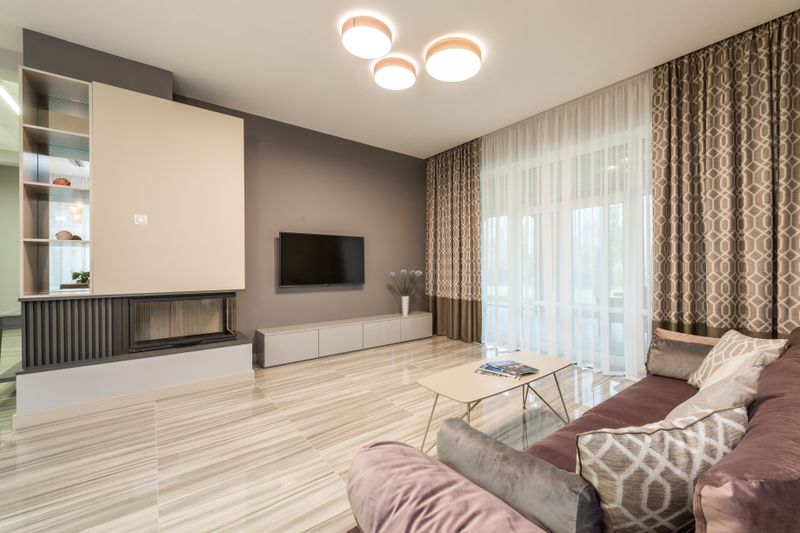
Open layouts often carry a lot of hard surfaces. Hardwood floors, quartz counters, drywall, and glass all bounce sound and light in ways that can make a room feel echoey or cold. Textiles are the counterweight. They absorb noise, warm up sightlines, and introduce the kind of tactile depth that paint alone cannot deliver.
Start with the largest soft surfaces and work down. Curtains that stretch from ceiling to floor draw the eye upward and make windows feel grander than they are. Linen and cotton blends in neutral tones cost far less than custom drapery and photograph beautifully in natural light. If your windows are oddly sized, ready-made panels paired with an inexpensive tension rod can still look polished when hung high and wide.
Rugs deserve special attention in open plans because they do double duty. They define zones, and they quiet the room. Look for flat-weave or indoor-outdoor rugs in larger sizes, which tend to run cheaper per square foot than plush wool. A nine-by-twelve rug under the living area and a smaller patterned runner in the entry can tie an entire floor plan together for under three hundred dollars.
Mixing Textures Within a Single Color Family
If you’re worried about pattern overload, lean on texture instead. A chunky knit throw, a boucle pillow, a jute basket, and a velvet cushion can all live in the same beige family and still feel layered and rich. Texture reads as pattern to the eye without introducing competing visuals, which is especially useful in open spaces where several zones share sightlines.
Common Mistakes That Undermine Open-Plan Styling
Even thoughtful plans can go sideways when a few avoidable habits sneak in. Being aware of them upfront saves time, money, and repainting weekends.
- Choosing too many undertones, which makes the space feel unresolved even when individual colors are lovely
- Buying furniture before mapping out zones, leading to pieces that are the wrong scale for their intended area
- Ignoring the ceiling, which is the one truly connected surface in an open layout and deserves intentional treatment
- Overmatching, where every textile and finish coordinates so tightly that nothing stands out
- Skipping sample pots, then committing to a wall color that looks completely different under your actual lighting
- Hanging art at inconsistent heights across zones, which fragments the space visually
The fix for most of these is slowing down. Live with painter’s tape on the floor outlining furniture footprints for a week before buying. Tape paint swatches to the wall and watch them shift from morning to evening. Open layouts reward patience because every decision ripples across a larger field of view.
Pulling It All Together Across Seasons
One underrated advantage of styling with paint and pattern is how easily you can refresh the look over time. Swap pillow covers in autumn for deeper rust and olive tones. Roll out a lighter rug in spring. Repaint a single accent wall every couple of years as your taste evolves. Because the bones of the layout, meaning the furniture placement and the main color story, stay consistent, small seasonal changes feel intentional rather than scattered.
This approach also makes holidays and gatherings easier. When zones are clearly defined, rearranging for a dinner party or a movie night takes minutes, not hours. You already know where the dining area ends and the lounge begins, so adding chairs or clearing a coffee table is a simple adjustment rather than a full reset.
Conclusion
Open floor plans ask more of their occupants than traditional layouts, but they also reward creativity in ways that closed rooms simply cannot. With paint, you can draw invisible walls that guide behavior and mood. With pattern, you can add rhythm and character that keeps the eye moving without overwhelming it. With intentional furniture placement and layered textiles, you can make even the largest open space feel like a collection of welcoming rooms.
None of this requires a contractor or a significant financial outlay. A few gallons of paint, a well-chosen rug, some thoughtfully mixed patterns, and a weekend of rearranging can shift an open layout from confusing to captivating. The budget stylists who get the best results are the ones who treat constraint as a creative prompt rather than a limitation.
Start with one zone, commit to a color story, and let the rest of the space unfold from there. By the time you’ve worked through the living area, the dining nook, and the transitions between them, you’ll have a floor plan that feels cohesive, comfortable, and distinctly yours, all without touching a single wall.