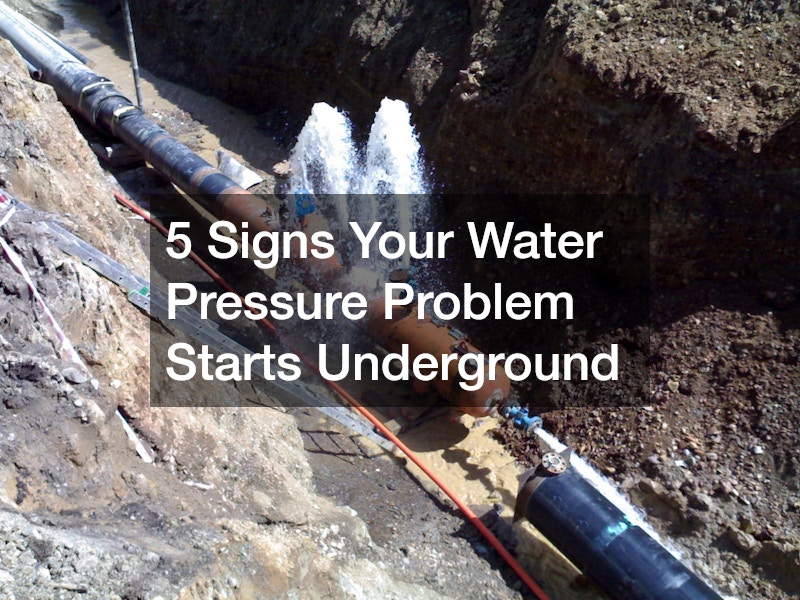

Weak water pressure inside your home is frustrating, but it is often just a symptom of a much bigger issue happening beneath your feet. While a clogged showerhead or faulty fixture can sometimes be the culprit, persistent or worsening pressure problems frequently trace back to underground pipes, aging wells, or shifting soil. Understanding these underground warning signs can save you from costly repairs down the road and help you address the real source of the problem instead of just the symptoms. This guide walks through the key clues that point to an underground cause so you know when it is time to look deeper.
Sudden Drops in Water Pressure Throughout the House
If every faucet and shower in your home suddenly loses pressure at the same time, the problem is rarely isolated to one fixture. A whole-house pressure drop usually points to something affecting the main supply line before it even reaches your plumbing system. This could mean a break, a significant leak, or a blockage somewhere between the street connection or well and your house. Because this type of issue affects the entire home uniformly, it is one of the clearest indicators that the problem starts underground rather than inside your walls.
Pay attention to whether the drop happened gradually over weeks or instantly overnight. A sudden loss often signals a pipe burst or major leak, while a slow decline may indicate mineral buildup or a slowly failing pipe joint underground. Either way, tracking the timeline can help a professional diagnose the issue faster.
Unexplained Wet Spots or Soggy Areas in the Yard
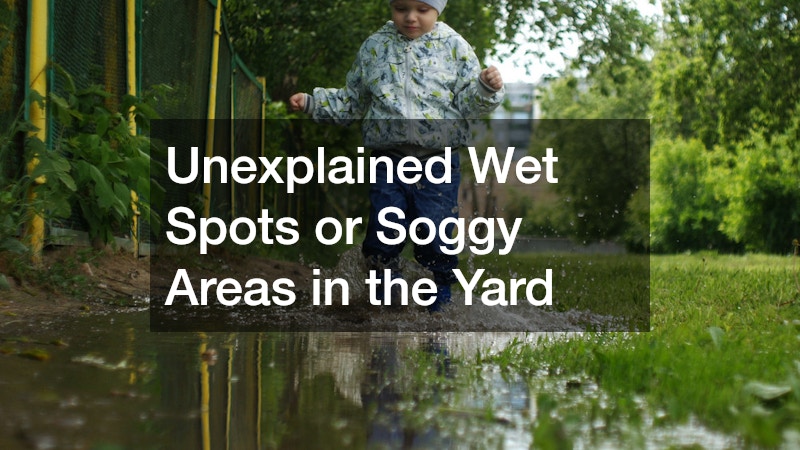
One of the most telling signs of an underground water problem is standing water or unusually lush, green patches in your yard that appear without rain. This often means a supply line has developed a leak and water is seeping upward through the soil before it ever reaches your home. Even a pinhole leak can release dozens of gallons a day, which is more than enough to keep a patch of grass noticeably greener and softer than the lawn around it. These wet areas can appear near the house, along the path between the street and your foundation, or near your well if you have one. Pay close attention to soggy ground that develops along a straight line, since supply pipes typically run in a direct path and a leak often surfaces somewhere along that route. You may also notice the soil feels spongy underfoot, or that your shoes sink slightly even days after the last rainfall. Other clues include mosquitoes or gnats clustering in one area, a faint sulfur or mildew smell, or grass that grows unusually fast in a small section despite no extra watering or fertilizer. If the wet spot is near a driveway or walkway, you might also see cracking or slight shifting in the pavement, since saturated soil loses some of its ability to support weight. Any of these details, on their own or combined, are worth investigating before the leak grows large enough to affect your home’s water pressure or foundation.
If you notice a patch of grass that’s always damp, unusually green, or squishy underfoot even when it hasn’t rained in days, that’s a strong clue your underground water line is leaking. Puddles that form near the same spot repeatedly, especially close to your home’s foundation or along the path between the street and your house, point to a broken or corroded pipe below the surface. Soggy spots are not just a pressure issue, they can also lead to foundation damage, mold growth, and even sinkholes if left unaddressed. A steady underground leak can erode soil over time, creating voids that cause driveways, walkways, or even sections of your yard to sink or crack. Left unchecked, that same moisture can seep toward your home’s foundation, weakening it and inviting mold or mildew into crawl spaces and basements. Catching this early can prevent a small leak from becoming a major structural repair, potentially saving you thousands of dollars down the line. If you spot these signs, it’s worth calling a plumber to run a pressure test or use listening equipment to pinpoint the leak’s exact location before digging becomes necessary.
- Grass that is greener, denser, or growing faster in one specific area, even during dry spells
- Soft, mushy ground that never seems to dry out, even days after the last rain
- Spongy turf that squishes underfoot or leaves visible footprints long after you walk across it
- Pooling water with no clear source like a sprinkler, gutter, or downspout nearby
- A noticeable dip or sunken area in the lawn, which can signal soil erosion from a leak below
- Water pooling near the foundation or along a straight line, often tracing the path of a buried pipe
- A sudden spike in your water bill alongside any of these visual clues in the yard
Rusty or Discolored Water Coming From Every Tap
Discolored water is often blamed on old indoor pipes, but when it shows up alongside low pressure at every fixture, the source is frequently underground. Corroding galvanized pipes, sediment intrusion from a cracked line, or a failing well casing can all introduce rust, sand, or sediment into your water supply. Because these materials also restrict flow as they build up, discoloration and pressure loss often appear as a package deal.
If your home relies on a private well rather than municipal water, sediment issues are especially common and may point to problems with the well itself rather than your household plumbing. In these cases, working with a company that offers water well services can help determine whether the issue lies in the casing, the pump, or the surrounding aquifer. Testing the water and inspecting the well components are usually the fastest ways to rule out a plumbing-only cause.
Persistent Low Pressure Despite New Fixtures and Appliances

Homeowners often replace showerheads, faucets, or even water heaters hoping to fix pressure problems, only to find the issue persists. When new equipment does not resolve the problem, it is a strong sign that the restriction is happening before water even enters the house. This could mean a partially collapsed pipe, an aging water main, or a well pump that is struggling to keep up with demand.
This is also a good time to consider whether the water itself, not just the pressure, is causing appliances to underperform. High mineral content can coat pipe interiors and appliance components over time, gradually reducing flow. A water filtration system installer can evaluate whether hard water or sediment buildup is compounding an underground pressure issue, since filtration and pressure problems are often related but require different solutions.
Gradual Pressure Decline Over Several Years
Not all underground problems announce themselves suddenly. Many homes experience a slow, steady decline in water pressure over the course of several years as pipes age, corrode, or shift slightly due to ground movement. This type of gradual change is easy to dismiss because it happens so slowly that homeowners adjust without realizing anything is wrong.
If you have lived in your home for a decade or more and pressure has quietly worsened, it is worth having the underground supply line and, if applicable, the well system inspected. For homes on private water systems, this may eventually involve well drilling to replace an aging well entirely if the casing has degraded or the aquifer has shifted. Catching this early through routine inspection is far less disruptive and costly than waiting for a complete system failure.
Low water pressure is rarely just an inconvenience, it is often a message from the systems buried beneath your yard that something needs attention. From soggy patches in the grass to persistent low flow despite new fixtures, these signs are worth taking seriously before they escalate into larger repairs. If you notice any of these warning signs, scheduling a professional inspection now can save you time, money, and stress later. Taking action early is the best way to protect both your home and your water supply for years to come.